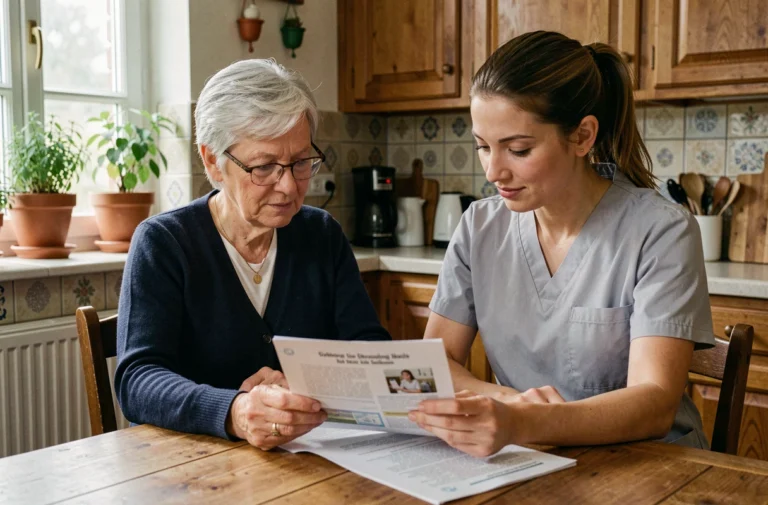
Since 2019, the Ministry of National Education has mandated the use of a digital workspace (ENT) in every public institution. However, some middle schools still use paper liaison notebooks alongside, due to a lack of full support from the educational community. Digital platforms show very variable connection rates depending on the academies and family profiles.
Teachers report an increase in parental requests, while some parents complain of an overload of information or a lack of support. Local authorities invest in tools that are sometimes incompatible with each other, complicating the flow of data.
When digital technology transforms the relationship between school and families
The digital school portal has made its way into more than 85% of schools in France, disrupting the flow of information between teachers, students, and families. Every week, parents and teachers check absences, schedules, and homework. Enhanced transparency, instant exchanges: school life now takes place behind a screen. Families gain unprecedented visibility into their children’s education, from tracking grades to direct messaging with teaching teams. The transmission of information no longer depends on a notebook, but on an internet connection and authentication at PIAL 54, detailed in the guide ‘Accessing the Academic Messaging of PIAL Nancy-Metz: Detailed Guide – Zone Webmaster’.
However, the generalization of these digital services brings about new inequalities. One in five families still faces difficulties in access or usage. The digital divide weighs heavily, especially in less equipped areas or for parents who are not comfortable with digital technology. The health crisis highlighted this gap, reminding us of the need for pedagogical continuity, but also the need to support every user.
Here are several points that illustrate the current landscape:
- More than 85% of institutions have a digital portal.
- Vocational high schools and priority education middle schools are better equipped.
- The Ministry of National Education is developing initiatives to equip and train teams.
The family-school dialogue is changing: more direct, sometimes more intense. Teachers report an increase in messages and parental requests. The digital management and local authorities strive to ensure accessibility, train users, and maintain human connections, a central issue for today’s school.

Concrete examples and limitations of digital portals: what we learn from the early years of use
In Yvelines, as everywhere else, educational technology has become ingrained in daily life: teachers, students, and school leaders are all now embracing these digital workspaces (ENT). Statistics from Depp, the statistical service of the ministry, reveal that the number of students per computer has significantly decreased since 2009. Vocational high schools and priority education middle schools often have better digital equipment than general high schools or colleges outside the REP network.
However, usage remains very disparate. French teachers use digital tools less than their OECD counterparts: digital literacy remains uneven, influenced by social context and personal interest. Even with a good level of equipment, the ability to navigate, sort, and verify digital information varies greatly from one student to another. The 2015 Digital Plan allowed for testing new practices, fostering autonomy and curiosity, but it did not eliminate gaps in usage.
Several notable observations emerge:
- One in five families still encounters obstacles in accessing or using the digital portal.
- Disparities in equipment and skills persist.
- Depp reports the emergence of cyberviolence, a concerning and recent phenomenon.
The massive deployment of educational digital services raises questions about the processing of personal data and compliance with European regulations. Vigilance is essential: transparency, security, consent, are all principles to be followed by each institution. The initial assessments paint a nuanced picture: between promises of openness and persistent challenges, French schools are moving forward, connected but not yet equal across their territory.
Will school life be written solely on screens tomorrow? Or will we need to reinvent proximity, beyond notifications?