Home help, teleassistance, nursing care, housing adaptation: the systems designed for seniors in France have multiplied in recent years. Their diversity makes it difficult to read, especially when it comes to distinguishing what is simply comfort from what truly conditions the ability to remain at home. This article compares the main services available, their scope, and the criteria that allow for informed choices.
SAD help or SAD help and care: two categories not to be confused
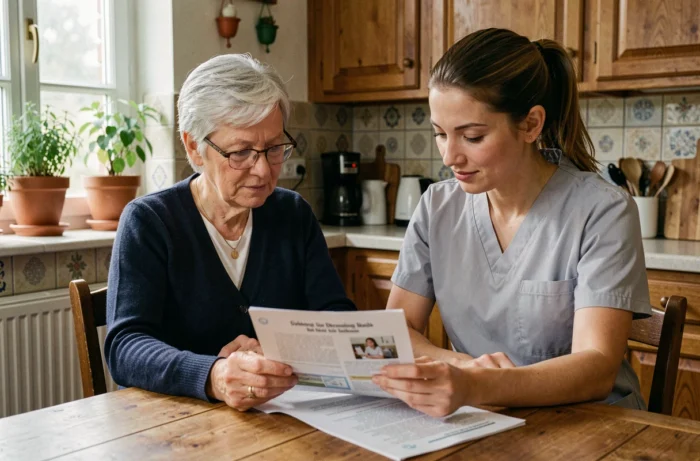
Since the reorganization of home autonomy services (SAD), two modalities coexist. The SAD “help” covers assistance with daily activities: bathing, dressing, meal preparation, routine cleaning of the home. They must direct the person towards care if their condition requires it.
The SAD “help and care” goes further by directly coordinating help and nursing care under the same administrative roof. In practice, a single contact person manages both the caregiver and nursing visits, which reduces disruptions in care pathways.
When a senior or their family evaluates the services offered by Conseils Seniors, this distinction between simple help and help combined with care serves as the first selection filter. Comparing only the advertised services without verifying the category of the service leads to discrepancies between actual needs and the coverage obtained.
| Criterion | SAD “help” | SAD “help and care” |
|---|---|---|
| Daily assistance | Yes (bathing, meals, cleaning) | Yes |
| Coordinated nursing care | No (referral to an external provider) | Yes (integrated into the service) |
| Single contact person | Limited to help | Help + care under the same coordination |
| Target audience | Moderate loss of autonomy | Loss of autonomy requiring regular care |

MaPrimeAdapt’ and senior housing adaptation
Adapting a home is not just about installing a grab bar in the shower. The MaPrimeAdapt’ program, managed by Anah, finances adaptation works for seniors under certain conditions. It requires support from a certified professional, which prevents poorly sized projects.
The value of this program lies as much in the financing as in the prior diagnosis. The certified professional evaluates the layout of the home, identifies areas at risk of falls, and proposes a coherent work plan. Without this framework, adaptations often remain partial: a secure bathroom, but a still dangerous staircase.
Points of caution before submitting a file
- Resource conditions determine the coverage rate. Checking eligibility with Anah before engaging in estimates avoids unnecessary expenses.
- Support from a certified professional is mandatory, not optional. Starting work without this intermediary excludes one from the program.
- Anticipate processing times: the submission of the file, the instruction, and the payment of assistance take several months. Starting the process as soon as the need arises changes the situation.
Territorial resource centers: the relay when traditional help is no longer enough
Some situations exceed the framework of usual services. An isolated person who falls at night, an exhausted family caregiver, a need for multiple daily visits: territorial resource centers intervene precisely in these critical cases.
These structures coordinate enhanced home interventions. They can mobilize teleassistance, organize additional visits from caregivers, set up night duty, or offer dedicated support to family caregivers.
Their existence remains little known to the general public. Families that reach a tipping point, where staying at home seems compromised, often do not know that an intermediate level exists between traditional home help and entering a facility. Yet it is this link that can delay the need for a medicalized structure by several months, sometimes even years.
Teleassistance and home health: complementarity of systems
Teleassistance is often presented as an isolated solution. In practice, it makes the most sense when it is articulated with other services.
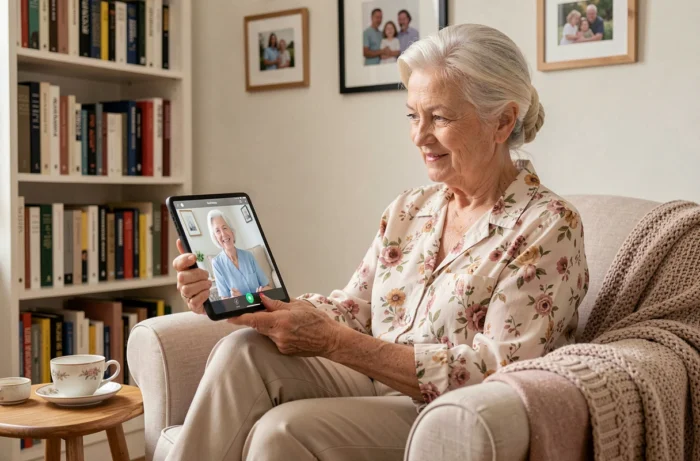
A teleassistance device connected to a monitoring center allows for an alert to be triggered in case of a fall or malaise. However, teleassistance alone does not replace care or human support. Its effectiveness depends on the associated intervention protocol: who is notified, within what timeframe, and with what medical follow-up.
What distinguishes a useful system from a gadget
- The monitoring center must be available continuously, including at night and on holidays.
- The alert protocol includes a chain of contacts (trusted neighbor, family, emergency services) with a defined order of solicitation.
- Some territorial resource centers integrate teleassistance into a global coordination plan, which enhances responsiveness.
- Systems with automatic fall detection provide additional coverage for individuals living alone who may not be able to press the alert button.
The challenge for seniors and their families remains not to stack services without coherence. A SAD “help and care” combined with integrated teleassistance within a territorial resource center offers a stronger safety net than three independent providers that do not communicate with each other. The coordination between systems determines their actual effectiveness, much more than the number of subscribed services.