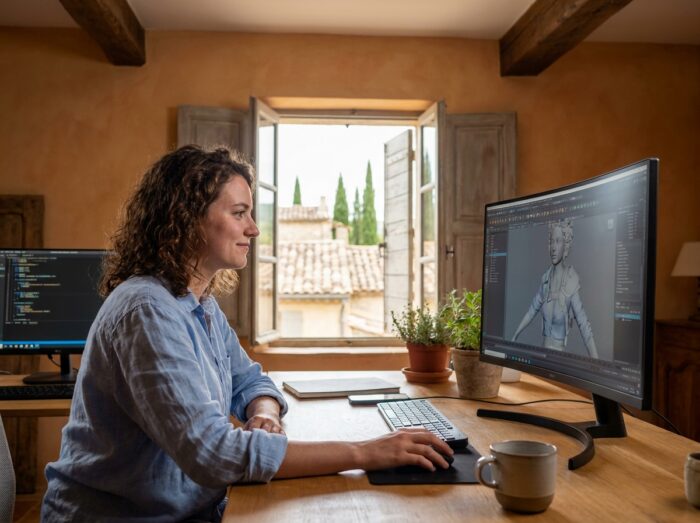
The 3D animation sector in France is going through a paradoxical period. International productions are increasingly turning to French studios thanks to attractive tax mechanisms, but the job market remains tight for recent graduates. In this context, choosing where to train is significant: the location of a school influences the professional network, the cost of living during studies, and access to internships.
Tax credits and regional studios: what’s happening behind the scenes
One of the least visible factors for a future student concerns the tax systems that structure the activity of studios in the territory. The tax credit for foreign productions made in France has been extended until December 31, 2028. Its rate remains set at 30% of eligible expenses, and can reach 40% for works that heavily rely on digital image processing.
This mechanism encourages the establishment or maintenance of studios outside of Paris. The southern regions, where land and salaries are more moderate than in Île-de-France, are becoming interesting bases for structures working on international projects. For a student, this means that staying in the South to study 3D animation potentially places them close to active studios on high-budget productions, without facing the cost of living in Paris.
However, the presence of a tax credit does not guarantee a constant volume of orders. Foreign productions are choosing between several European countries offering similar incentives. Activity can fluctuate from year to year.
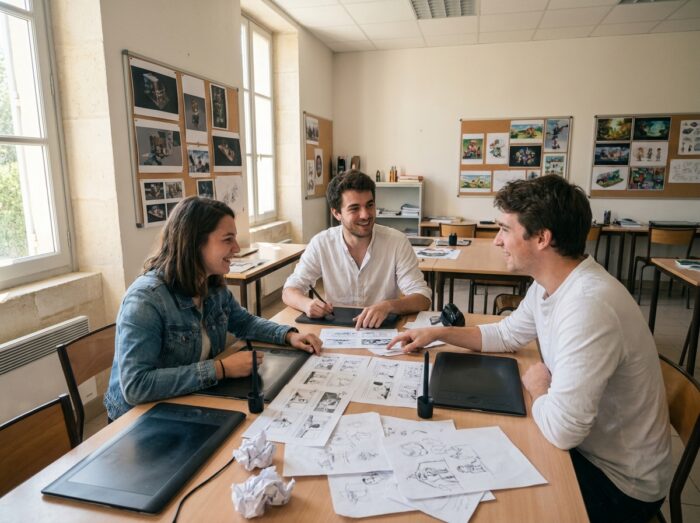
3D animation schools in the South: Arles, Montpellier, Toulouse
Several cities in the South of France concentrate recognized training in animation. MoPA, located in Arles, has been training 3D animation professionals for over twenty years and boasts an international reputation, particularly thanks to the graduation short films regularly selected in festivals.
Montpellier offers a different ecosystem. The city is not limited to animation cinema: it hosts video game companies, including Ubisoft, which recruits 3D artists and gameplay animators. A student trained in this city can therefore aim for several sectors rather than a single path in feature films.
Toulouse, on the other hand, combines a diverse industrial fabric (aerospace, space, digital) with schools offering programs in animation and special effects. The city benefits from a transport network that connects it quickly to Paris and Spain, facilitating travel for internships or collaborations.
How the living environment concretely changes things
The cost of student rent in Montpellier or Toulouse remains significantly lower than that in Paris or its nearby suburbs. Over a three to five-year program, this difference is not negligible. It can free up budget to invest in equipment, fund workshops, or simply reduce the financial pressure that pushes some students to take on multiple part-time jobs at the expense of their training.
The Loop festival in Avignon, whose second edition took place in October, also illustrates the cultural vitality of the region in terms of animation. These local events allow students to meet professionals without crossing France.
Job market in animation: the reality behind the brochures
The RECA conference dedicated to professional integration presents a finding that tempers enthusiasm: the animation market in France is currently saturated. Studios report receiving several hundred unsolicited applications per year and cannot absorb all graduates.
This observation holds true regardless of the region. Training in the South does not provide more protection against this reality than elsewhere. Ground feedback varies on this point: some graduates find a position quickly thanks to a well-placed internship, while others go through several short contracts for years.
- The quality of the portfolio and demo reel remains the determining criterion during an interview, much more than the prestige of the diploma or the city of training.
- Internships completed during the program often serve as the first entry point into a studio. Their geographical location matters: an internship in a studio in the South creates a local network.
- Versatility (animation, modeling, rigging, compositing) increases the chances of landing a first position, especially in medium-sized structures.
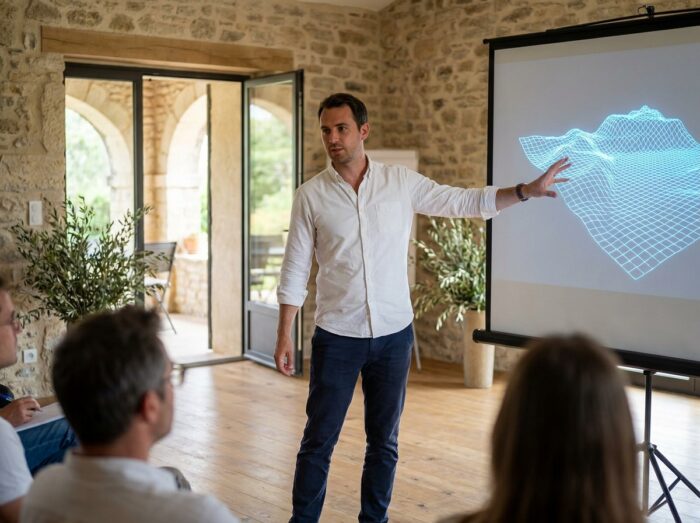
Video games and 3D visualization: opportunities beyond animation cinema
Reducing 3D animation to cinema alone would be a misdirection. The skills acquired during training apply to various sectors: video games, advertising, architecture, industrial simulation, virtual reality. In the South, Montpellier concentrates a significant share of job offers related to video games, with positions for 3D artists and roles in gameplay animation.
This sectoral diversity represents a safety net for graduates. An animator capable of working on both a game character and a commercial multiplies their opportunities. Programs that integrate cross-disciplinary projects (short films, game assets, motion design) better prepare students for this reality than those that focus exclusively on feature films.
Skills sought by recruiters
Job offers in the South frequently mention proficiency in software such as Blender, Maya, or Houdini. Knowledge of production pipelines and the ability to work in teams on collaborative projects are also recurring criteria.
A program that allows students to build a diverse portfolio during their studies, with projects completed under conditions close to actual production, provides a concrete advantage during recruitment.
Choosing a 3D animation training program in the South of France offers tangible benefits: proximity to studios benefiting from favorable tax incentives, a more accessible cost of living, and a local ecosystem that goes beyond just animation cinema. These advantages do not exempt one from hard work on their portfolio or from being realistic about the state of the market. The location of a school opens doors, but it is the quality of the work produced during the program that determines whether someone crosses them.