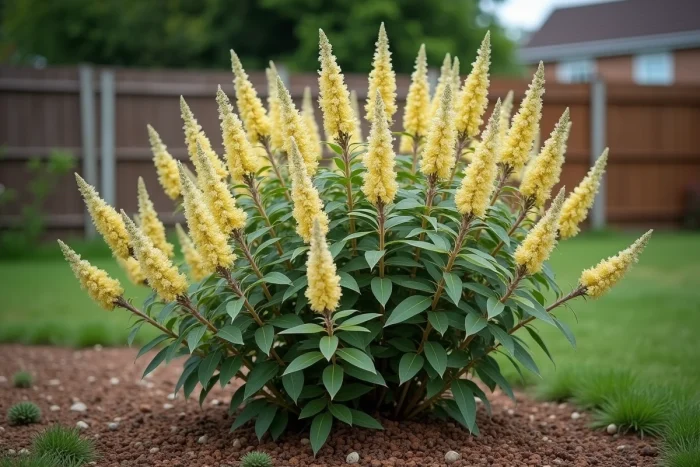
A well-established buddleia, exposed to sunlight, watered regularly, and yet no panicle in sight: the discrepancy between the plant’s vegetative vigor and the absence of flowers indicates a measurable imbalance. Several factors, often combined, explain why a butterfly bush produces abundant foliage without ever blooming. The challenge is to identify which factor weighs the heaviest in each situation.
Soil Compaction and Buddleia Blooming: An Underestimated Link
Competitors detail pruning, exposure, or excess nitrogen. However, a parameter rarely addressed deserves special attention: the physical structure of the soil around the roots.
Field observations of ornamental shrubs in urban environments show that buddleias planted along driveways, on soil compacted by traffic or enriched with fill, often exhibit green vegetation but few or no flowers. Compaction reduces oxygenation of the fine roots, limiting the production of young wood, which is precisely what bears the flowers in Buddleja davidii.
Identifying the causes of the absence of flowers requires checking this parameter even before reviewing pruning or fertilization. A simple spade test can measure soil resistance: if the blade penetrates difficultly in the first twenty centimeters, the substrate is likely too dense to allow for active rooting.
Comparison Table of Factors Blocking Blooming
Not all factors carry the same weight or frequency. The table below ranks the most common causes according to their impact on blooming and the ease of correction.
| Factor | Impact on Blooming | Observed Frequency | Correction |
|---|---|---|---|
| Pruning at the wrong time | High (removes flowering wood) | Very frequent | Prune in late winter, before growth resumes |
| Soil compaction | High (limits young wood) | Frequent in urban areas | Loosen, mulch, avoid trampling |
| Excess nitrogen | Medium to high (promotes foliage) | Frequent in amended soil | Remove nitrogen fertilizers, add potash |
| Lack of sunlight | High | Moderate | Replant in an open location (min. 6 hrs/day) |
| Thermal stress (heatwave) | Medium (buds that dry out) | Increasing since 2022 | Thick mulch, evening watering |
| Plant too young | Low to medium | Frequent among new gardeners | Wait 2-3 seasons |
This table highlights a often overlooked point: pruning and soil compaction are at the top, far ahead of lack of water or the age of the plant. The first two factors are also those on which intervention yields the quickest results.
Buddleia Pruning: Why Timing Changes Everything
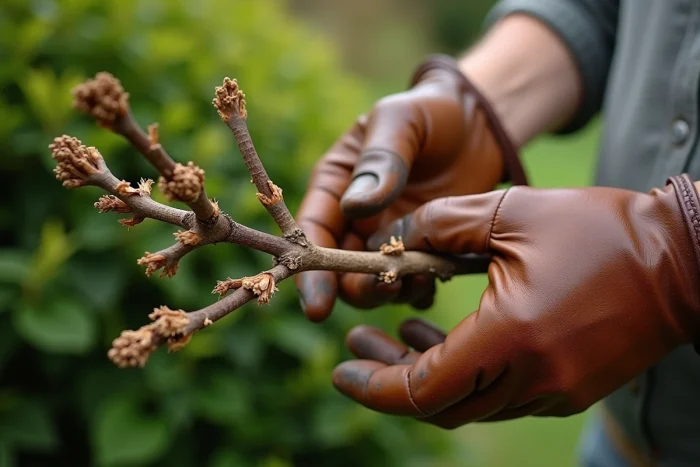
Buddleja davidii blooms exclusively on the wood of the year. Each branch produced in spring potentially bears a panicle in summer. Pruning after the start of vegetation means removing these future flower supports.
The ideal pruning window is between February and March, depending on the region, just before the buds visibly swell. Cutting back last year’s branches to two or three pairs of buds stimulates the production of vigorous, flowering shoots.
In several French cities, green space services practice mechanical pruning with hedge trimmers, sometimes twice a year, to keep buddleias in compact form. This type of repeated pruning prevents the formation of sufficiently long branches to bloom. The result is a dense, green shrub, but sterile in terms of flowers.
Mechanical Pruning vs. Thoughtful Pruning
The difference between the two approaches comes down to a technical point: thoughtful pruning maintains a structure of framework branches on which new wood can develop freely. Mechanical ball pruning indiscriminately cuts both old wood and young shoots, depriving the shrub of its ability to produce panicles.
For a buddleia in a private garden, a single annual pruning at the end of winter is sufficient. Removing faded inflorescences during the summer extends blooming without disrupting the growth cycle.
Thermal Stress and Warm Nights: A Recent Factor
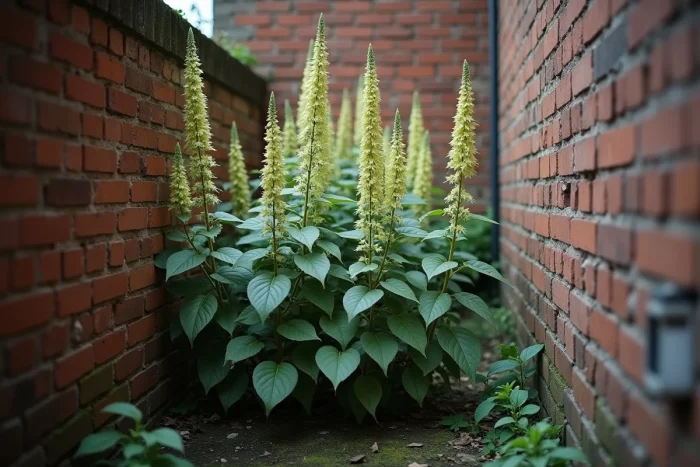
Since the heatwaves of 2022-2023 in Western Europe, trials in nurseries and botanical gardens have reported a marked decline in blooming in Buddleja davidii during very hot summers. The buds dry out before opening, and blooming becomes brief and staggered instead of producing large, well-filled panicles.
The determining factor is not solely drought. Too warm nights disrupt floral induction and the replenishment of the shrub’s carbohydrate reserves. This phenomenon, documented by the Royal Horticultural Society after the summer of 2022, particularly affects gardens in urban areas where the heat island effect amplifies nighttime temperatures.
Mitigating the Impact of Heatwaves on Buddleia
- Apply a thick mulch (at least ten centimeters) at the base of the shrub to maintain soil coolness and limit evaporation
- Water in the late afternoon rather than in the heat of the day, targeting the root zone without wetting the foliage
- Avoid any summer pruning during a heatwave, as healing consumes reserves that the shrub cannot replenish if nights remain warm
Excess Nitrogen and Unbalanced Soil Fertilization
A rapidly growing buddleia that produces large dark green leaves but no flowers is likely receiving too much nitrogen. This imbalance directs the plant towards vegetative growth at the expense of blooming.
Sources of excessive nitrogen are numerous:
- Lawn fertilizers applied in immediate proximity to the buddleia and leached towards its roots
- Young compost or fresh manure placed at the base of the shrub every autumn
- Soil naturally rich in organic matter (former vegetable gardens, around septic tanks)
- Exclusive mulching with fresh grass clippings, which are very high in nitrogen
A potash application (such as untreated wood ash) in late winter rebalances the ratio and promotes flowering. Potash also strengthens the shrub’s resistance to cold and diseases, which indirectly contributes to more regular blooming.
The buddleia is a shrub that, in its natural habitat, colonizes wastelands, railway embankments, and poor soils. Providing it with too rich a soil paradoxically deprives it of what triggers its blooming: a slight nutritional stress that pushes the plant to reproduce rather than grow.
Correcting the absence of blooming in a butterfly bush rarely involves a single action. The combination of well-timed pruning, loosened soil, and low-nitrogen fertilization generally produces visible results by the following season. Thermal stress remains the only factor where the margin for maneuver is limited, but appropriate mulching often suffices to mitigate its effects.